100-Hour ANC Over-Ear Headphones for Clear Calls
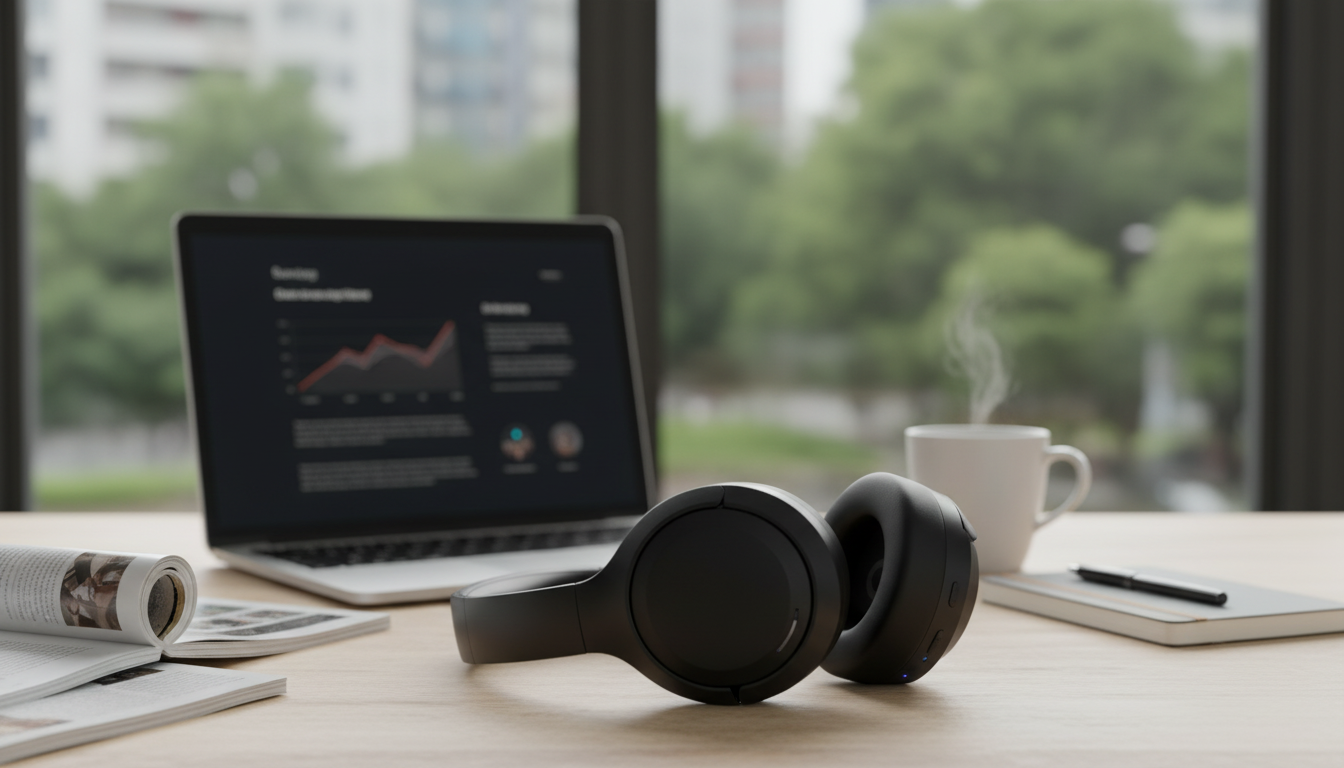
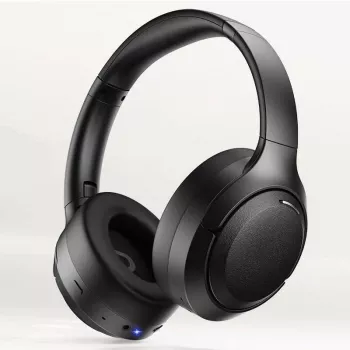
Wireless Over-Ear Headphones with ANC, ENC & 100-Hour Playtime
Built for long days, loud places, and clear calls, these wireless over-ear headphones combine active noise cancellation for focus, environmental noise cancellation for voice clarity, and marathon battery life for travel, commuting, and work. The result is a simple, dependable headset for switching between music, meetings, podcasts, and video without constantly worrying about your surroundings—or your charger.
What These Headphones Are Designed For
If headphones are part of your daily routine, a feature set like ANC + ENC + long battery life is less about specs and more about reducing friction. These are especially useful when you want steady noise reduced, calls to sound more intelligible, and comfort that holds up through long sessions.
- Blocking steady background noise (airplane hum, AC, bus engines) with active noise cancellation
- Keeping calls intelligible in real-world environments using voice-focused noise reduction
- Lasting through multi-day use without daily charging thanks to extended playtime
- Comfort for long sessions with an over-ear fit that helps passive isolation
- Simple everyday switching between music, meetings, podcasts, and videos
For a practical reference point on why reducing prolonged noise exposure matters, see NIOSH guidance on noise exposure.
ANC and ENC: What Each One Does
ANC and ENC are often grouped together, but they solve different problems. One improves what you hear; the other improves what others hear from you.
- ANC reduces what reaches the ears by countering outside sound—most noticeable on consistent low-frequency noise
- ENC targets what the microphone picks up during calls, reducing surrounding chatter and wind-like noise so the listener hears speech more clearly
- ANC is primarily for listening comfort; ENC is primarily for call quality
- Best results come from combining a good seal (earcup fit) with ANC and using the headset mic position consistently
ANC vs. ENC at a Glance
| Feature | Primary Benefit | Most Useful For | Typical Limitations |
|---|---|---|---|
| ANC (Active Noise Cancellation) | Quieter listening environment | Flights, commuting, open offices | Less effective on sudden sharp sounds; depends on fit/seal |
| ENC (Environmental Noise Cancellation) | Clearer voice on calls | Work calls, gaming chat, street calls | Can’t remove all noise; mic placement matters |
Battery Life and Charging: Making 100 Hours Practical
A 100-hour headline number is most valuable when it changes your routine: fewer charging cycles, fewer low-battery surprises, and less gear to pack. For travel-heavy weeks, long shifts, or a shared household where devices rotate between users, extended playtime can feel like a genuine upgrade.
- Extended playtime reduces charge anxiety for travel weeks, on-call shifts, and shared household use
- Battery longevity depends on volume level, codec/connection stability, and whether ANC is enabled
- A consistent charging routine (top-ups rather than deep drains) can help long-term battery health
- For trips: charge fully before departure, pack the charging cable, and keep a quick top-up window during layovers
Wireless stability also plays a role in real-world battery performance. If you’re curious how Bluetooth devices manage connections and profiles, the Bluetooth SIG overview is a helpful high-level reference.
Comfort, Fit, and Passive Isolation
Even strong ANC can’t fully compensate for a poor fit. Over-ear headphones do double-duty: the cushions help block some sound naturally (passive isolation), and a consistent seal helps ANC work more effectively—especially for low-frequency noise.
- Over-ear designs typically offer better passive isolation than on-ear styles because the earcup surrounds the ear
- A secure but gentle clamp improves seal (better bass and more effective ANC) without causing pressure hotspots
- For glasses wearers: softer cushions and moderate clamp pressure reduce temple discomfort and leakage
- Heat buildup can happen during long use; short breaks and a slightly looser fit can help
Sound and Listening Modes to Look For
For everyday listening, the most enjoyable sound signature is often the one that doesn’t require constant tweaking. A balanced tuning tends to play well across playlists, voices, and streaming video.
- Balanced tuning supports mixed content—music, podcasts, and video—without constant EQ changes
- If transparency/ambient mode is available, it helps with announcements and quick conversations without removing the headset
- Stable wireless performance matters as much as tuning for daily reliability—especially in crowded RF environments
- Low-latency performance is important for gaming and video; if available, enable a dedicated low-latency mode
Everyday Use Scenarios
Commuting
ANC can reduce fatigue from continuous transit noise and make lower listening volumes feel comfortable. That often means less temptation to crank volume just to overpower the environment.
Work-from-anywhere
ENC helps your voice stay clearer when cafés, shared rooms, or busy households get unpredictable. It’s especially useful when you can’t control the background but still need to sound professional.
Travel
Home
Quick Setup and Care Tips
Wireless Over-Ear Headphones with ANC, ENC & 100-Hour Playtime: Snapshot
Product Overview
| Product | Price | Availability | Link |
|---|---|---|---|
| Wireless Over-Ear Headphones with ANC, ENC & 100-Hour Playtime | 53.97 USD | In stock | View product |
| Soft Leather Retro Tote Bag for Women | 25.51 USD | In stock | View product |
| Ultralight Non-Slip Aluminum Bike Pedals with Sealed Bearings | 39.82 USD | In stock | View product |
FAQ
Does active noise cancellation remove all noise?
No. ANC is typically strongest against steady, low-frequency sounds like engine hum, while sudden or higher-frequency noises may still come through. Fit and seal also matter—gaps around the earcups can reduce how effective ANC feels.
What is ENC and how does it help on calls?
ENC (environmental noise cancellation) is microphone-focused noise reduction designed to make your voice clearer to the person on the other end. It primarily improves what others hear from you during calls rather than changing what you hear while listening.
Will battery life be the same with ANC turned on?
Usually not—using ANC typically reduces total playtime. Actual runtime varies with volume, connection quality, and how consistently features like ANC and call processing are engaged.









Leave a comment