54-Piece SAE & Metric Socket Kit with Ratchet & Case
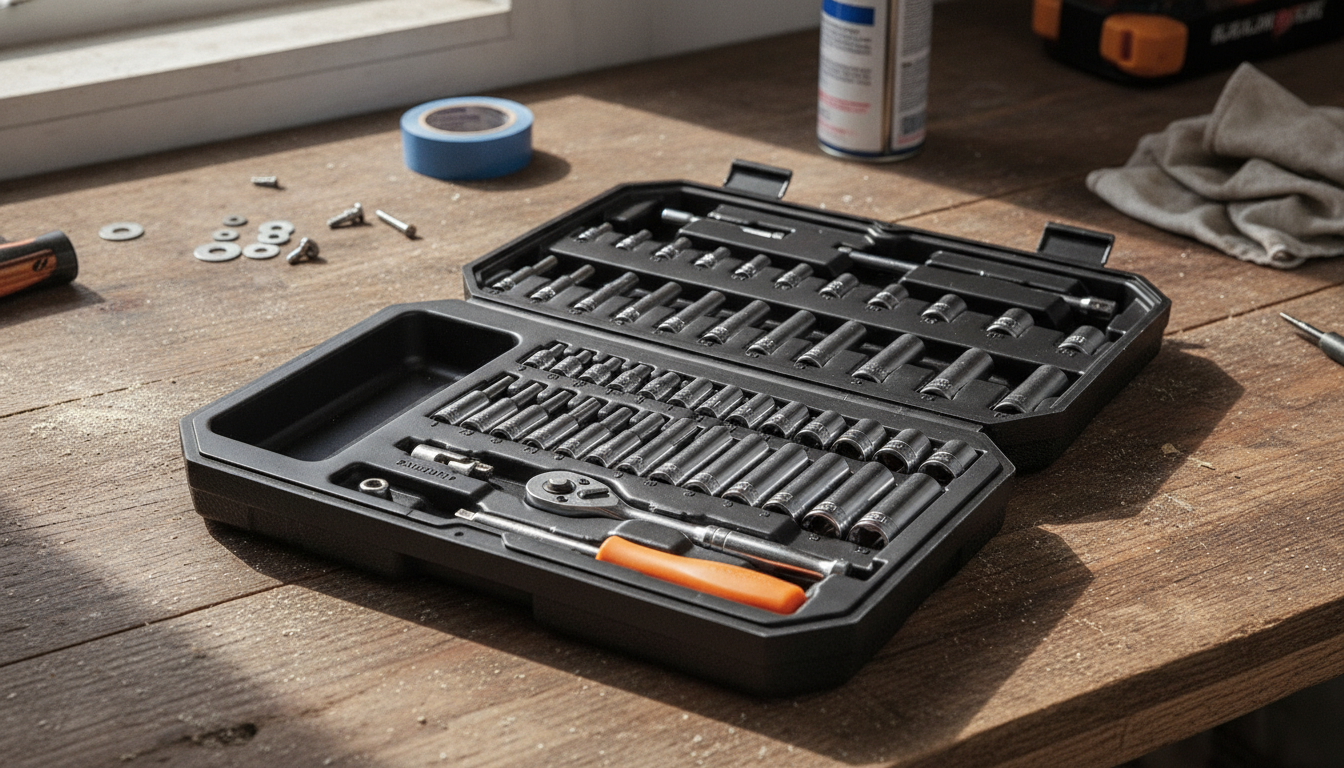
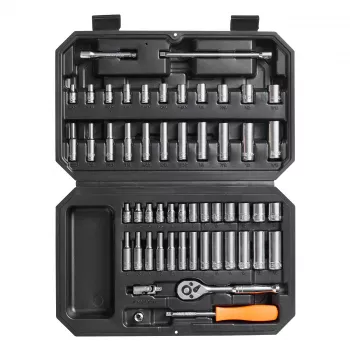
54-Piece SAE & Metric Socket and Ratchet Tool Set with Storage Case
A compact socket set can cover most everyday fastening tasks—automotive trim work, furniture assembly, bicycle and mower adjustments, and quick household repairs. This 54-piece SAE and metric socket-and-ratchet kit focuses on grab-and-go convenience with a dedicated storage case, helping keep sizes organized and easy to find when a job needs both measurement systems.
For anyone building a practical starter kit or upgrading from mismatched loose sockets, the 54-Piece SAE & Metric Socket and Ratchet Tool Set with Storage Case is built around the idea that the best tool is the one that’s nearby, complete, and ready to work.
What the set is designed to handle
- Mixed fastener environments: projects where both SAE and metric hardware show up on the same task (common in older equipment, imported parts, and assorted home hardware).
- General maintenance: tightening loose bolts, removing panels, servicing small engines, and light automotive work where a compact kit is preferable to a full chest.
- Portable problem-solving: a case-based kit that can live in a trunk, garage shelf, or utility drawer without pieces scattering.
- Everyday use cases: assembling outdoor gear, mounting accessories, basic bike and scooter adjustments, and home fixtures that use hex-head bolts.
Set overview and key components to expect
A well-balanced socket-and-ratchet set is about coverage and workflow: having the right sizes, being able to drive them efficiently, and not losing pieces between jobs. In a 54-piece format, the goal is to stay portable while still covering the most commonly encountered fasteners.
- Sockets in two measurement systems so common sizes are available without switching kits.
- A ratchet that drives sockets for faster turning than an open-end wrench in tight or repetitive work.
- Accessories for reach and positioning (for example, extensions and adapters) so fasteners recessed behind panels are easier to access.
- A storage case that keeps each piece in a fixed spot so missing sizes are noticeable and transport is simpler.
- A 54-piece count that balances coverage with portability for apartments, dorm tool drawers, and small garages.
If the kit is meant to live alongside other essentials (gloves, tire gauge, flashlight), pairing it with a durable everyday carry option can help keep a trunk or closet organized. A roomy bag like the Soft Leather Retro Tote Bag for Women can double as a clean “grab bin” for light tool-and-accessory storage at home.
Ratchet and socket features that affect real-world performance
Two socket sets can look similar on a product page and feel completely different on a job. The details below influence how confidently the tool engages fasteners, how quickly tasks go, and how likely you are to round off a bolt head.
- Drive size compatibility: confirm the ratchet drive size matches the sockets and any existing extensions already owned.
- Tooth count and swing arc: finer-tooth ratchets work better in tight spaces where the handle can’t swing far; coarse-tooth ratchets can be simpler and durable for general use.
- Socket depth: shallow sockets suit exposed fasteners; deeper sockets help when bolts protrude or studs extend beyond the nut.
- Markings and readability: clear size stamps reduce mistakes, especially when alternating between SAE and metric.
- Fit and retention: a secure socket-to-ratchet connection reduces wobble and helps keep sockets from dropping in confined areas.
Quick checklist for evaluating a socket-and-ratchet kit
| Feature | Why it matters | What to check before buying/using |
|---|---|---|
| SAE + metric coverage | Reduces downtime when hardware types are mixed | Look for a balanced range of both systems; confirm the sizes most used are included |
| Ratchet swing arc | Works better in tight spaces | Higher tooth count generally means a smaller swing arc |
| Socket depth options | Handles studs and recessed fasteners | Ensure the kit includes the depths needed for typical projects |
| Storage case layout | Speeds up size selection and prevents loss | Each piece should have a labeled or shaped spot; latches should close securely |
| Finish and corrosion resistance | Helps longevity in humid garages or vehicle storage | Wipe down after use; store dry; check for protective plating/coating |
Storage case and organization tips
A socket set is only “complete” if the pieces come back after the job. The storage case is more than packaging—it’s an inventory system that saves time and prevents repeat purchases.
Using SAE and metric correctly to avoid rounding fasteners
For a deeper reference on measurement systems, the National Institute of Standards and Technology (NIST) overview of SI units is a reliable place to confirm how metric sizing is defined. For tool expectations and industry norms, an overview of ASME B107 hand tool standards provides helpful context.
Care, maintenance, and long-term durability
Who this 54-piece kit fits best
For cyclists who regularly tweak cockpit hardware, accessories, or drivetrain components, a compact socket-and-ratchet set can complement ride-ready parts like the Ultralight Non-Slip Aluminum Bike Pedals with Sealed Bearings, keeping basic adjustments straightforward when swapping or servicing components.
FAQ
What is the difference between SAE and metric sockets?
SAE sockets are sized in inches (often shown as fractions), while metric sockets are sized in millimeters. Using the correct system for the fastener helps prevent slipping and rounding the corners of the bolt or nut.
Can a 54-piece socket set handle basic car repairs?
It’s typically well-suited for light-to-moderate tasks like trim removal, battery terminal work, small brackets, and routine adjustments. Heavy, high-torque jobs (like suspension fasteners) often require additional tools such as a breaker bar, torque wrench, or specialty sockets.
How should sockets and a ratchet be stored to prevent rust?
Store them clean and dry in the case, and wipe off oil or moisture before putting pieces back. Avoid leaving the kit in damp areas; for vehicle storage, a small desiccant packet can help reduce humidity inside the case.







Leave a comment