Red Lipstick HOA PBT Keycaps: 128-Key Double-Shot Set
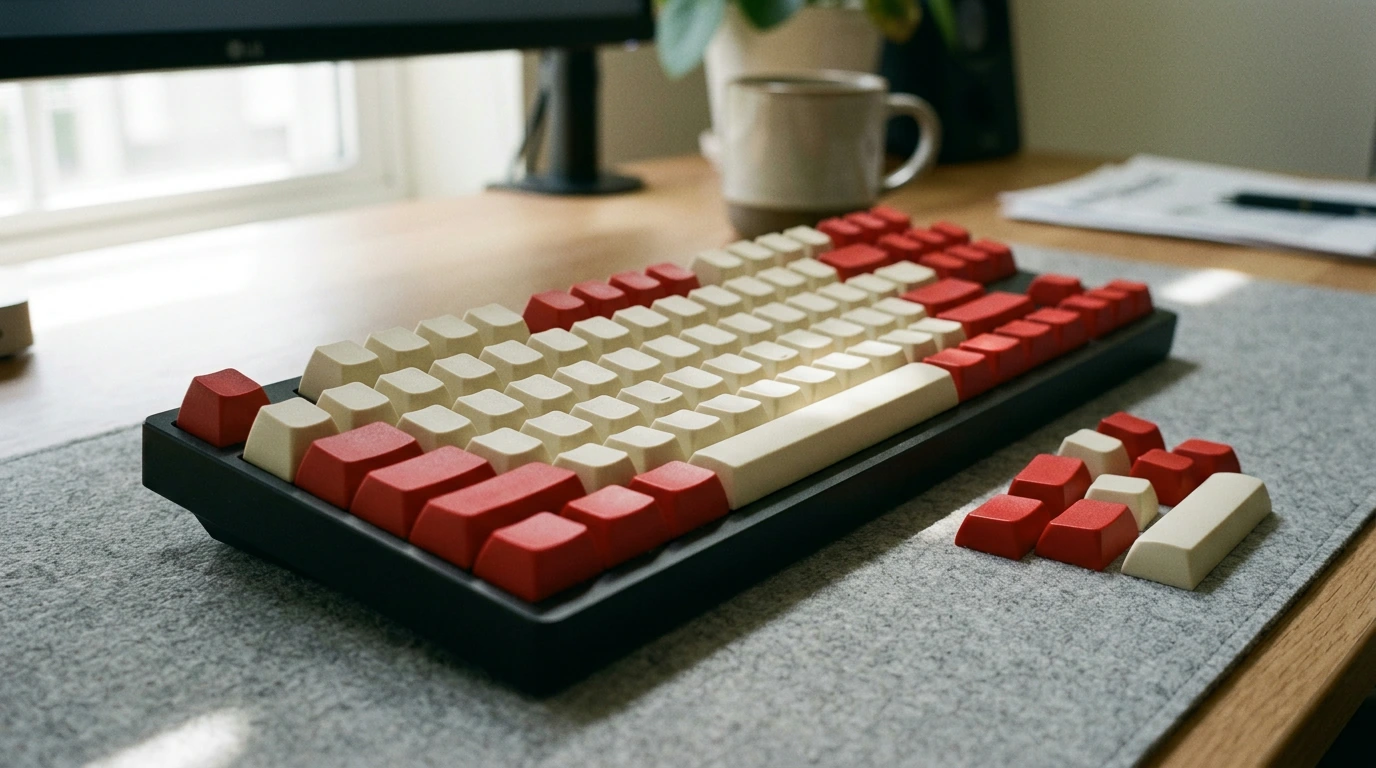
Red Lipstick Double-Shot HOA Profile PBT Keycap Set (128 Keys)
A bold red-and-cream keycap set can refresh a keyboard’s look and sound without changing switches or the board itself. This 128-key, double-shot PBT set uses an HOA profile for a comfortable sculpted feel, with legends designed to stay crisp through daily use. If you want a striking “lipstick” colorway that still reads clearly at a glance, this set is built for both style and steady everyday typing. For more guidance, see 128 Key Red Lipstick Jelly MOA Profile PBT Keycaps Set – Cute ….
What makes this set stand out
- Lipstick-inspired red colorway with high-contrast legends for quick readability
- Double-shot construction designed to prevent legend wear from frequent typing
- PBT material chosen for a more textured feel and better shine resistance than many ABS sets
- 128-key coverage intended to fit a wide range of layouts beyond basic 104-key boards
If you’ve been living with thin, shiny stock caps, swapping to thicker PBT and a sculpted profile can make a keyboard feel more “finished” without any permanent changes. For further reading, see PBT Red Lipstick Jelly Keycaps – MOA Profile, 128 Keys For Cherry ….
Shop in-stock picks
These items are currently available:
- Red Lipstick Double-Shot HOA Profile PBT Keycap Set – 128 Keys ($39.51)
- Soft Leather Retro Tote Bag for Women ($25.51)
- Ultralight Non-Slip Aluminum Bike Pedals with Sealed Bearings ($39.82)
Materials and legend durability
PBT (polybutylene terephthalate) is popular in keycaps for its firmer feel and its tendency to resist developing a glossy “shine” as quickly as many ABS caps. While any keycap can wear over time, PBT is often chosen by heavy typists because the texture tends to stay more consistent longer. For a background reference on the plastic itself, see Polybutylene terephthalate (PBT).
Just as important as the plastic is how the legends are made. Double-shot legends are not ink or dye on the surface; they’re formed by molding a second piece of plastic as the character itself. That means the symbol is “built in,” so the character remains visible even when the top surface sees years of use.
Legend methods compared
| Method | How it’s made | Typical wear behavior |
|---|---|---|
| Double-shot | Two plastics molded together | Legends typically do not fade because they are not printed |
| Dye-sublimation | Dye infused into the plastic surface | Very durable; contrast depends on material/color |
| Pad printing | Ink printed on top | Can wear or chip with time and friction |
HOA profile feel and typing comfort
Keycap “profile” is the overall shape and row sculpting of the caps. HOA is a sculpted profile designed to balance comfort and accuracy, keeping each row distinct under your fingertips. That row-to-row difference matters more than it sounds: it helps guide finger placement and can reduce accidental presses, especially when typing quickly or when your hands float slightly above the home row.
If you’re coming from OEM or Cherry-style keycaps, expect a slightly different finger travel and sound signature. Sound changes come from multiple factors—plate material, case acoustics, and switch type—but a thicker PBT cap often contributes a subtly deeper, less “plasticky” note compared to thin caps. For a deeper overview of how profiles differ, Deskthority’s keycap profiles guide is a helpful reference.
Compatibility and layout coverage (128 keys)
This set is designed for MX-style cross stems, the most common mount used on mechanical keyboards. (For background on that mount style, see Cherry MX.) If your board uses MX-compatible switches, the caps should mount securely and sit straight when pressed down evenly.
The advantage of a 128-key kit is flexibility: it typically includes extra modifiers and alternate sizes meant to support more than just a basic full-size layout. That said, “supports many layouts” isn’t the same as “fits every keyboard.” Before ordering, confirm whether your board is ANSI or ISO, whether it uses a non-standard bottom row, and whether the right Shift is standard length (many 65% and 75% boards differ).
Quick fit checklist
| Check | Why it matters | What to confirm |
|---|---|---|
| Stem type | Determines whether caps mount securely | MX-style cross (most common) vs. other stems |
| Enter key | Different shapes require different caps | ANSI (rectangular) vs. ISO (L-shaped) |
| Bottom row | Many boards use non-standard sizes | Spacebar length and modifier widths |
| Right Shift | 75%/65% often vary | Standard vs. shorter Shift size |
Colorway, legends, and desk aesthetics
Installation tips and care
Simple install sequence
| Step | Action | Tip |
|---|---|---|
| 1 | Remove stabilized keys first | Work slowly around the wire/bar to avoid bending it |
| 2 | Pull remaining caps by rows | Keeps similar-row caps grouped for faster sorting |
| 3 | Place caps on a layout guide | A printed keyboard diagram helps confirm sizes |
| 4 | Press caps straight down | Avoid rocking side-to-side on the stem |
Who this keycap set suits best
FAQ
Will these keycaps fit my mechanical keyboard?
They’re designed for MX-style cross stems, which fit many mechanical keyboards. Still, confirm your layout (ANSI vs. ISO), bottom-row sizing, and right-Shift length; a 128-key kit often includes extras, but it’s best to match your board’s specific sizes.
Do double-shot legends wear off?
Double-shot legends are molded from a second piece of plastic rather than printed, so the characters typically won’t fade away with normal use. The surface can still show general wear over time, but the legend remains visible.
How do PBT keycaps feel compared to ABS?
PBT usually feels a bit more textured and is known for resisting shine better than many ABS sets. Depending on your keyboard and switches, PBT can also contribute to a slightly deeper sound.








Leave a comment