5-Piece Silicone Baby Feeding Set: Suction Dishes + Cup

5-Piece Silicone Baby Feeding Set with Suction Dishes & Sippy Cup
Mealtime gets easier when a baby’s first dishes are designed to stay put, feel comfortable in little hands, and clean up fast. This 5-piece silicone set pairs suction-ready dishes with a training-friendly sippy cup to help reduce spills while supporting self-feeding at home or on the go. If you’re setting up a simple feeding station for early solids, a coordinated silicone set can bring a little more calm to everyday breakfasts, snacks, and dinner.
Why silicone works well for early feeding
Silicone is popular for baby feeding gear because it’s soft, flexible, and generally easier to live with than rigid dishware during the toss-and-drop phase.
- Gentle, slightly grippy texture can help bowls and plates resist sliding during scooping.
- Flexible material helps reduce the risk of chips or sharp edges compared with rigid dishware.
- Heat resistance makes it practical for warm foods and common cleaning routines (always follow the product’s care guidance).
- Non-porous surfaces are often chosen to simplify cleanup after purees and sticky foods.
For guidance on starting solids and building safe, age-appropriate routines, see the American Academy of Pediatrics’ overview on starting solid foods and the CDC’s infant and toddler nutrition resources.
What’s included in the 5-piece set
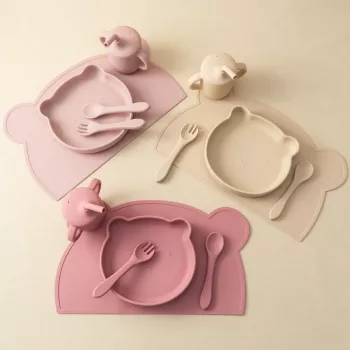
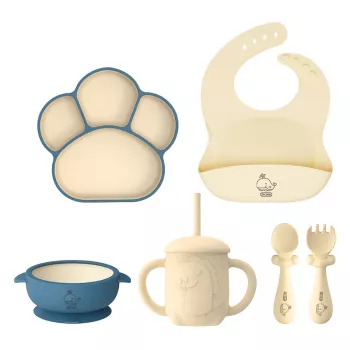
A coordinated set helps keep feeding routines consistent—especially helpful when you’re rotating between high-chair meals, countertop snacks, and quick bites while traveling. The core idea is suction-style dishware plus a sippy cup so you’re not piecing together mismatched items across the week.
- A coordinated set built around suction-style dishes plus a sippy cup for everyday meals and snacks.
- Useful as a starter kit for babies beginning solids or as a refresh for daycare/grandparents’ house.
- Color-matched pieces help keep a consistent routine across plate/bowl/cup.
Set Components at a Glance
| Piece | Primary use | Parent-friendly benefit |
|---|---|---|
| Suction dishware (plate/bowl) | Purees, finger foods, snacks | Helps reduce tipping and chasing dishes across the high chair tray |
| Sippy cup | Water or milk during meals | Supports transition from bottle to cup with less mess |
| Additional silicone pieces (varies by set) | Feeding and serving | Creates an all-in-one setup for daily use |
Suction dishes: getting the best hold
Suction is one of those features that feels “magic” when it works—and frustrating when it doesn’t. The good news: most suction issues come down to surface and setup, not the dish itself.
- Best suction results typically come from clean, smooth, flat surfaces; textured or porous tabletops can weaken grip.
- Press down firmly at the center to expel air, then test the seal with a gentle lift at the edge.
- Avoid oily residue on the table/high-chair tray; a quick wipe can noticeably improve suction.
- If suction weakens over time, deep-cleaning and fully drying the base can help restore performance.
If you regularly eat on textured wood or matte, grained surfaces, try using a smooth placemat or a clean high-chair tray insert when possible. That small change often turns “okay suction” into “stays put long enough to finish the meal.”
Sippy cup routines for smoother transitions
For many families, cup training goes best when it’s predictable and low-pressure. A consistent routine helps babies understand what the cup is for—and keeps tossing and surprise spills to a minimum.
- Offer small amounts of water with meals to build familiarity and reduce overwhelm.
- Choose consistent times (breakfast/lunch/dinner) to make cup use predictable.
- Practice short “sip and set down” moments to reduce tossing and spilling.
- Check for age-appropriate flow and ensure all parts are seated properly to reduce leaks.
If your child is just getting started, it can help to begin with tiny pours (just a few sips). That way, a spill is minor, and you can reinforce the routine without turning it into a cleanup marathon.
Safety and materials checklist for baby feeding gear
Even the most convenient feeding set works best when it’s paired with simple safety habits and regular checks.
If you’re curious about how food-contact materials are generally evaluated in the U.S., the U.S. Food & Drug Administration’s overview of food contact substances is a helpful reference.
Cleaning and care tips that keep the set looking new
When this set is a great fit (and when to skip it)
Product details and quick buy link
- Product: 5-Piece Silicone Baby Feeding Set with Suction Dishes & Sippy Cup
- Price: $35.51 (USD); availability: in stock
- Helpful as a practical gift for baby showers, first birthdays, or new parents setting up a feeding station
If you’re building a grab-and-go routine for outings and daycare drop-offs, pairing feeding gear with a roomy diaper bag can simplify the daily shuffle. Consider adding the Large-Capacity Multi-Function Diaper Backpack for Everyday Parenting to keep cups, bibs, and spare silicone pieces organized.
FAQ
Do suction dishes stick to all high-chair trays and tables?
They usually work best on smooth, flat, non-porous, and clean surfaces. Textured trays, curved edges, and porous wood grain can reduce suction; wiping the surface and pressing firmly from the center to push out air often improves the seal.
How should silicone baby dishes and sippy cups be cleaned?
Rinse soon after use, then wash with mild soap and a soft sponge, and follow the manufacturer’s dishwasher and heat guidance if included. Let all parts dry fully before stacking or storing, and regularly inspect lids, valves, and seals for wear.
Can warm foods and liquids be served in silicone dishware and cups?
Silicone is commonly chosen for its heat resistance, but it’s still important to follow the specific product’s instructions and limits. Always test temperature before serving and avoid offering overly hot foods or liquids that could burn.









Leave a comment